
Injectable Treatments in Athens
At Athenaeum Aesthetics in Vouliagmeni, injectable treatments are used to refresh facial appearance while preserving natural expression, balance and individuality.
Our approach is not based on simply adding product. Each treatment plan begins with facial assessment, patient goals and medical judgement, so that Botox, hyaluronic acid fillers, skin boosters, mesotherapy or regenerative injectables are used only when they can genuinely improve the overall result.
A Personalized Approach to Injectable Treatments
At Athenaeum Aesthetics, injectable treatments are not performed as isolated procedures, but as part of a comprehensive facial assessment.
Many patients request specific treatments such as Botox or dermal fillers based on what they have seen or heard. However, the same treatment can produce very different outcomes depending on facial anatomy, skin quality, age-related changes and overall balance.
For this reason, our approach focuses on understanding the underlying cause of each concern, rather than simply treating visible signs.
In some cases, volume loss may be the primary issue. In others, muscle activity, skin quality or structural support may be more relevant. The treatment plan is therefore individualized and may involve a combination of techniques, or in some cases, the recommendation to avoid unnecessary intervention.
The goal is always the same:
to achieve natural, balanced results without overcorrection or an artificial appearance.
Subtle changes. Balanced results. No unnecessary procedures.
What Injectable Treatments Include
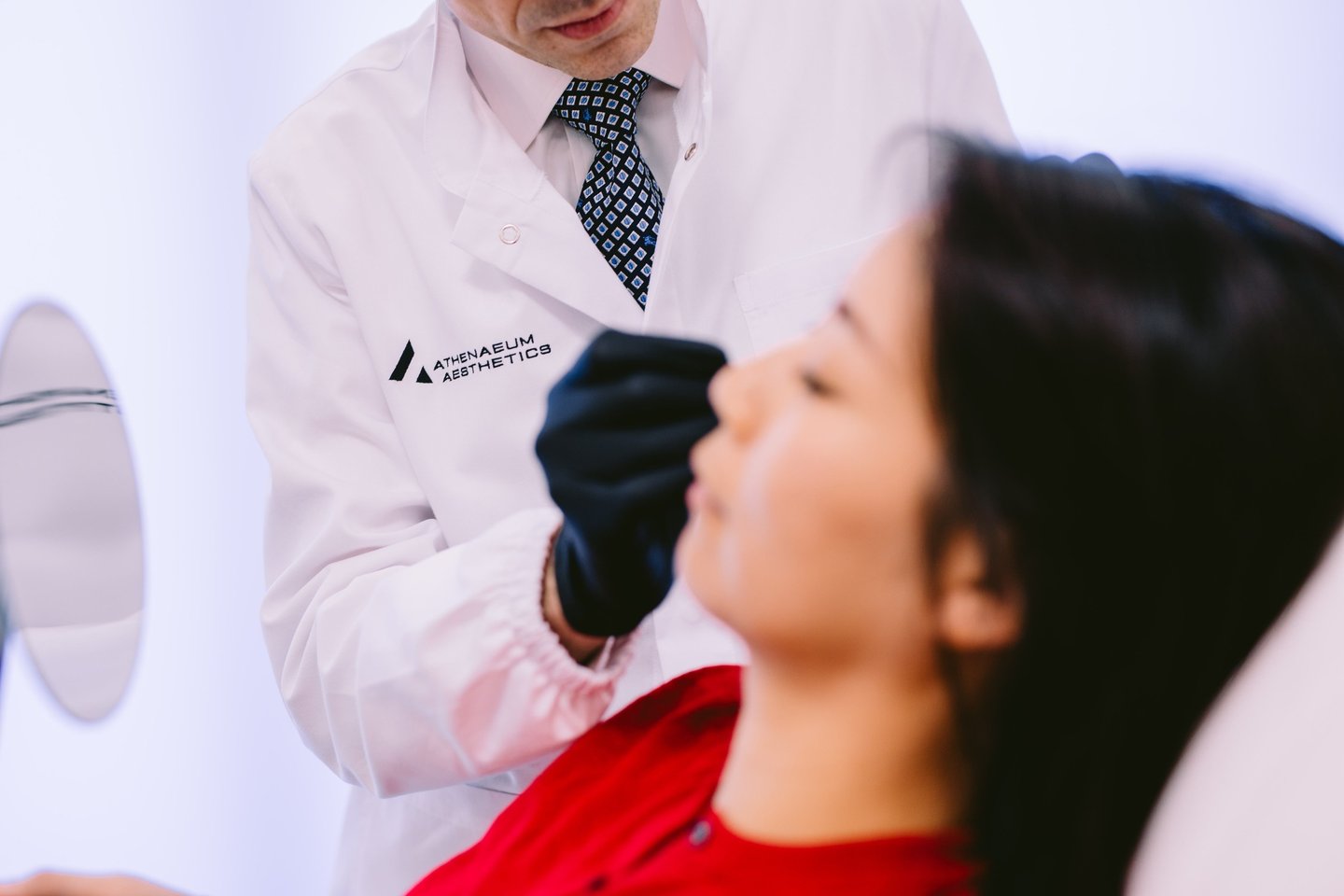
Injectable treatments encompass a range of techniques designed to address different aspects of facial aging and skin quality. Rather than being interchangeable, each category serves a specific purpose and is selected based on individual needs and treatment goals.
At Athenaeum Aesthetics, the most commonly used injectable treatments include:
Botulinum Toxin (Botox)
Used to reduce dynamic lines caused by muscle activity, such as forehead lines, frown lines and crow’s feet. It can also be used strategically to improve facial balance and prevent the deepening of expression lines over time.
Hyaluronic Acid Fillers
Designed to restore volume, enhance contours and improve facial proportions. Fillers can be used in areas such as the cheeks, lips, jawline and under-eye region, always with the aim of maintaining natural harmony.
Skin Boosters & Mesotherapy
Treatments focused on improving skin quality rather than structure. These include hydration, improvement in texture, and overall skin vitality using products such as skin boosters, mesotherapy cocktails and biorevitalization agents.
Regenerative Injectables (PRP & Polynucleotides)
These treatments aim to stimulate the skin’s natural regenerative processes. Platelet-rich plasma (PRP) and polynucleotides are used to improve skin quality, elasticity and overall regenerative capacity over time. In some cases, treatments may also be combined with advanced laser skin treatments to further improve skin texture and overall skin quality.
Unlike isolated treatments performed without assessment, these options are often combined in a structured way to achieve a more balanced and natural result.
Botulinum Toxin (Botox) for Facial Rejuvenation
Botulinum toxin, commonly known as Botox, is one of the most widely used injectable treatments for the reduction of dynamic facial lines. These lines are formed by repeated muscle activity over time and typically appear on the forehead, between the eyebrows and around the eyes.
When applied correctly, Botox softens these expressions without eliminating natural movement, resulting in a more rested and refreshed appearance.
What Botox Can Treat
Forehead lines
Frown lines (glabellar lines)
Crow’s feet
Eyebrow positioning (subtle lift effect)
Neck bands (in selected cases)
Jawline slimming (masseter reduction, when indicated)
Natural Results Depend on Technique
The outcome of Botox treatment is not determined by the product itself, but by the way it is applied.
Excessive dosing or poor placement can lead to a frozen or unnatural appearance. At Athenaeum Aesthetics, Botox is used conservatively and precisely, respecting individual muscle dynamics and facial expression patterns.
The objective is not to eliminate movement, but to soften it in a way that preserves character and expression.
When Botox May Not Be Enough
In some cases, lines are not caused solely by muscle activity, but also by volume loss or skin changes.
In these situations, Botox alone may not provide the desired result, and a combined approach with dermal fillers or skin quality treatments may be recommended.
Is Botox Suitable for Everyone?
Botox is suitable for both prevention and treatment of dynamic lines, but not every patient requires it.
A proper consultation is essential to determine whether Botox is appropriate, whether alternative treatments may be more effective, or whether no treatment is needed at all.
If you are considering Botox treatment in Athens, a personalized consultation is the best way to understand what approach will provide the most natural result.
Hyaluronic Acid Fillers for Volume Restoration and Facial Balance
Hyaluronic acid fillers are used to restore lost volume, enhance facial contours and improve overall balance. Unlike Botox, which affects muscle activity, fillers work by supporting the underlying structure of the face and addressing changes related to aging, genetics or facial proportions.
When used appropriately, fillers can produce subtle but meaningful improvements without altering natural identity.
What Fillers Can Improve
Volume loss in the cheeks
Under-eye hollowness (tear trough, in selected cases)
Lip definition and subtle enhancement
Jawline and chin contour
Nasolabial folds and marionette lines
Overall facial balance and proportions
Natural Results Depend on Proper Assessment
One of the most common misconceptions is that fillers are used simply to “add volume” to a specific area.
In reality, natural results depend on understanding where volume has been lost, where support is needed, and where no intervention should be performed.
Overfilling or treating isolated areas without considering overall facial harmony can lead to an unnatural or heavy appearance.
At Athenaeum Aesthetics, fillers are used conservatively, with a focus on restoring structure and balance rather than creating obvious volume.
When Fillers May Not Be the Right Choice
Not every concern should be treated with fillers.
In some cases:
Skin laxity may be better addressed with surgical options
Fine lines may respond better to skin quality treatments
Certain areas may not benefit from volume addition
A thorough consultation ensures that fillers are only used when they are the appropriate solution.
A Combined Approach Often Produces Better Results
Fillers are often combined with other treatments such as Botox or skin boosters to address different aspects of facial aging.
This combined approach allows for more balanced and natural outcomes, rather than relying on a single treatment to solve multiple concerns.
The objective is not to change facial features, but to restore proportion, support and harmony in a way that remains undetectable.
Skin Boosters, Mesotherapy and Biorevitalization Treatments
Not all injectable treatments are designed to change facial structure. Skin boosters and mesotherapy focus on improving skin quality, hydration and overall appearance, rather than adding volume or altering contours.
These treatments are particularly useful for patients who want a fresher, healthier appearance without visible structural change.
What These Treatments Aim to Improve
Skin hydration
Fine lines and early signs of aging
Skin texture and elasticity
Dull or tired-looking skin
Overall skin quality and radiance
Types of Treatments Used
This category includes a range of injectable options, selected based on individual skin needs:
Skin boosters (hyaluronic acid-based hydration treatments)
Mesotherapy cocktails (vitamins, amino acids and antioxidants)
Biorevitalization treatments such as NCTF and similar formulations
Hybrid treatments like Profhilo, designed to improve skin hydration and elasticity
These treatments do not aim to reshape the face, but to enhance the condition of the skin itself.
Subtle Results That Improve Over Time
Unlike fillers or Botox, results from these treatments are often more gradual.
The goal is not an immediate visible change, but a progressive improvement in skin quality that becomes noticeable over time. For this reason, a series of treatments is often recommended.
When These Treatments Are Most Appropriate
Skin boosters and mesotherapy are ideal for:
Younger patients seeking prevention
Patients who are not ready for fillers
Maintenance between other treatments
Improvement of skin quality after procedures
They can also be combined with other treatments to enhance overall results.These treatments are best suited for patients who value subtle, progressive improvements rather than immediate, dramatic change.
These treatments are best suited for patients who value subtle, progressive improvements rather than immediate, dramatic change.
Regenerative Injectable Treatments (PRP & Polynucleotides)
Regenerative injectable treatments aim to stimulate the body’s natural repair mechanisms, rather than simply adding volume or relaxing muscles.
These treatments are designed to improve skin quality, elasticity and overall tissue health by activating biological processes within the skin.
They are particularly suitable for patients seeking a more natural, biologically driven approach to facial rejuvenation.
Platelet-Rich Plasma (PRP)
PRP is derived from the patient’s own blood and contains growth factors that support tissue repair and regeneration.
It can be used to:
Improve skin quality and texture
Enhance healing after procedures
Address dark circles (in selected cases)
Support hair restoration treatments
Because it is autologous, PRP is well tolerated and integrates naturally with the skin’s biology.
Polynucleotides
Polynucleotides are regenerative agents that help improve skin quality by supporting cellular repair and hydration.
They are used to:
Improve skin elasticity
Enhance hydration at a deeper level
Support tissue regeneration
Improve delicate areas such as under the eyes
These treatments are increasingly used as part of a long-term skin quality strategy.
A Different Philosophy of Treatment
Unlike traditional injectables that produce immediate visible changes, regenerative treatments work progressively.
The focus is on improving the condition of the skin over time, making them particularly suitable for patients who prefer subtle, natural-looking results.
When Regenerative Treatments Are Recommended
These treatments may be considered:
As part of long-term anti-aging strategies
For patients with early signs of aging
For improving skin quality in difficult areas
In combination with other injectable or laser treatments
A consultation is necessary to determine whether regenerative treatments are appropriate and how they can be integrated into a personalized plan.
Regenerative injectables represent a shift from correcting visible changes to improving the underlying quality of the skin itself.
Natural Results and Individualized Treatment Planning
The success of injectable treatments is not determined by the product used, but by how well the treatment plan is adapted to the individual.
At Athenaeum Aesthetics, the objective is not to change facial identity, but to enhance and restore it in a subtle and balanced way.
Every face is different, and the same treatment approach cannot be applied to every patient.
Not Every Patient Needs Every Treatment
It is common for patients to request specific treatments such as fillers, Botox or skin boosters. However, not all treatments are appropriate for every individual.
In some cases, a different approach may provide a better result. In others, treatment may not be necessary at all.
This selective approach helps avoid overcorrection and ensures that interventions remain proportionate and appropriate.
When Less Is More
One of the most important aspects of aesthetic medicine is knowing when to limit treatment.
Excessive use of injectables can lead to an unnatural appearance, even when each treatment is performed correctly.
For this reason, treatments are planned conservatively, often in stages, allowing results to be assessed before proceeding further.
A Long-Term Perspective
Injectable treatments are not isolated events, but part of a longer-term approach to facial aesthetics.
Gradual, well-planned interventions over time tend to produce more stable and natural results compared to aggressive, one-time corrections.
This approach also allows for adjustments based on how the face evolves over time.
The Role of Consultation
A proper consultation is essential to determine:
whether injectable treatments are appropriate
which techniques should be used
what level of correction is realistic
whether alternative treatments may be more suitable
This process ensures that each treatment plan is medically sound and aligned with the patient’s expectations.
Subtle changes. Balanced results. No unnecessary procedures.
Book a Consultation for Injectable Treatments in Athens
If you are considering injectable treatments, the most important step is a personalized consultation.
At Athenaeum Aesthetics in Vouliagmeni, each consultation is focused on understanding your goals, assessing your facial structure and determining whether injectable treatments are appropriate for you.
Rather than recommending standardized treatments, we provide individualized guidance based on medical assessment and aesthetic balance.
During your consultation, we will:
Assess your facial structure and skin quality
Discuss your concerns and expectations
Explain which treatments may be appropriate
Clarify what results can realistically be achieved
Advise whether treatment should be performed, delayed or avoided
Consultations are performed by experienced plastic surgeons, ensuring that all recommendations are based on medical judgement rather than standardized protocols.
No obligation to proceed with treatment is expected following your consultation.
Frequently Asked Questions About Injectable Treatments
How long do injectable treatments last?
The duration depends on the type of treatment.
Botulinum toxin typically lasts 3–4 months, while hyaluronic acid fillers may last between 6–18 months depending on the area and product used. Skin boosters and regenerative treatments often require a series of sessions with gradual improvement over time.
Will the results look natural?
When performed with proper assessment and technique, injectable treatments should not be obvious. The aim is to soften features and restore balance without altering natural expression or identity.
Are injectable treatments painful?
Most treatments are well tolerated. Fine needles or cannulas are used, and in many cases topical anesthetic can be applied to improve comfort during the procedure.
Is there any downtime after treatment?
Downtime is usually minimal. Some patients may experience mild swelling, redness or bruising, which typically resolves within a few days.
Which injectable treatment is right for me?
This depends on your concerns, anatomy and treatment goals. A consultation is necessary to determine whether Botox, fillers, skin boosters or regenerative treatments are appropriate.
Can injectable treatments be combined?
Yes. In many cases, combining treatments provides more balanced and natural results, as different techniques address different aspects of facial aging.
At what age should I start injectable treatments?
There is no specific age. Some patients start earlier for prevention, while others seek treatment later to address visible changes. The decision should be based on individual needs rather than age alone.